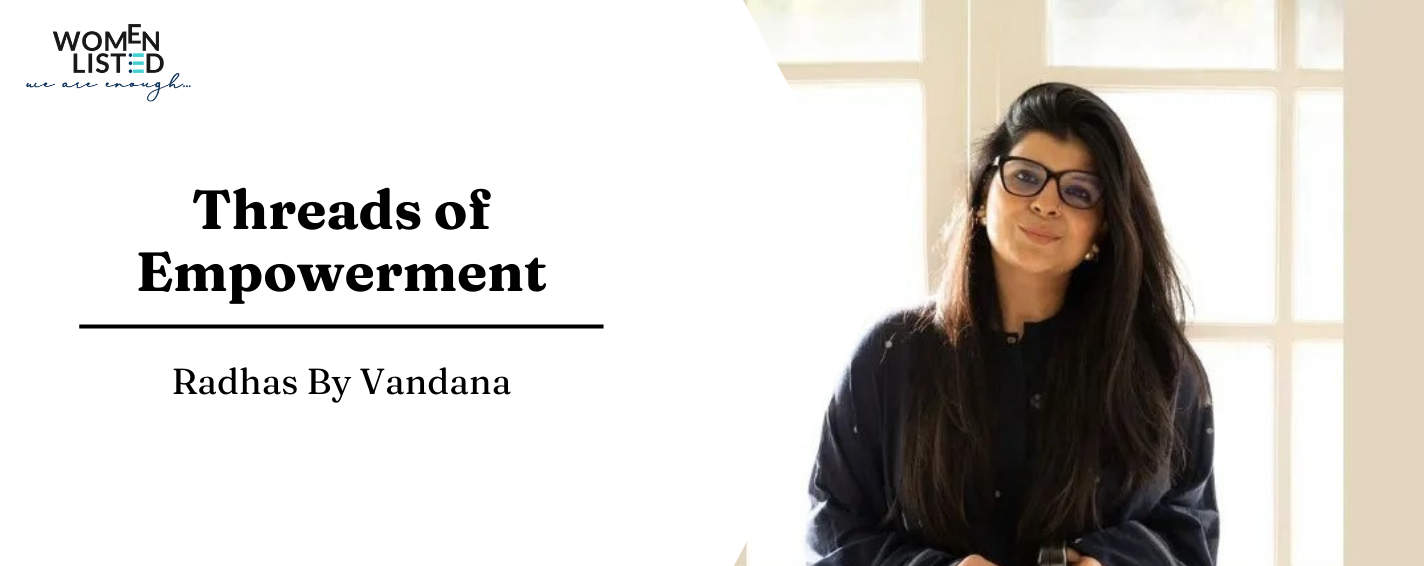
Radhas by Vandana is the handcrafted apparel label created by Vandana Kapoor Dhawan, and this profile looks at how the brand grew from a 2018 handloom-focused venture into a premium name for customized handcrafted apparel. We cover the origin of the brand name, the textile traditions behind its collections, and how Vandana built trust through customization and artisan-led storytelling online.
How We Evaluated This Brand Story
We based this article on Women Listed's published profile of Vandana Kapoor Dhawan, the brand details already attributed to her journey, and supporting references on Indian handloom processes and craft traditions. We also checked whether the product language matched real textile practices rather than generic ethnicwear marketing.
What stood out to us was that Radhas by Vandana is described as a premium handcrafted apparel brand rather than a mass-market label. For a brand built around Indian handloom, that distinction matters because the value comes from material knowledge, artisan labor, fit, and customization.
The Story Behind Radhas
The brand origin: why Radhas by Vandana exists
Radhas by Vandana began when Vandana Kapoor Dhawan left a long corporate career to build something closer to her personal grounding in Indian textiles. After 15 years in HR leadership roles, she shifted toward entrepreneurship with a clear point of view: handcrafted clothing could be more personal, more wearable, and more respectful of artisan skill.
The name Radhas by Vandana is tied to her daughter, Radha, but the brand identity does more than borrow a family name. It signals a softer, more personal approach to dressmaking—one where the garment is shaped around the wearer instead of forcing the wearer into a standard size chart. In our reading, that is a clear difference between Radha by Vandana as a brand idea and generic festive labels built mainly around surface detail. For readers curious about how such craft-led labels expand across channels without losing clarity, NanoPIM's site offers added retail context.
Signature craft practices and textiles
The label works with Indian handloom and handcrafted textile processes that already carry strong regional and material histories. Ajrakh, for example, is known for its layered hand-block printing and resist-dyeing tradition using natural or traditional dye processes; the Textiles Committee, Ministry of Textiles outlines how labor-intensive this craft is from washing and mordanting to repeated printing and dyeing. That context makes Vandana's emphasis on handcrafted production more meaningful than a simple style claim.
Her collections also draw from Jamdani, Shibori, Ikat, and Chanderi. Jamdani is valued for its discontinuous weft motifs woven directly into the fabric, while Chanderi is recognized for its lightweight texture and dressy drape; the Indian Institute of Handloom Technology overview helps explain why these fabrics remain important in premium Indian clothing. Vandana's use of Shibori techniques such as Arashi, Itajime, and Kuma on mulmul adds another layer of craft-led distinction, because the visual effect comes from process rather than printed imitation.
If there is one practical takeaway here, it is this: Radhas by Vandana is not built around one hero product but around a textile vocabulary. Ajrakh brings depth, Jamdani brings intricacy, Shibori brings movement, and Ikat and Chanderi widen the brand's wardrobe range.
Designed for customization, comfort, and longevity
Vandana has said, “I customize the fabric from the thread and try to match the client’s requirements not only in terms of styling but also the kind of climate they live in and also the lifestyle they have.” That line explains the operating model better than any slogan could. The brand is built around customized handcrafted apparel, with decisions shaped by fabric behavior, weather, body comfort, and use case.
This is also where Radhas by Vandana appears to resonate with plus-size customers and women looking for free-size comfort clothing that still feels elegant. Instead of treating comfort as a compromise, the label uses silhouette and textile choice to make room for confidence.
Another notable detail is Vandana's effort to reduce fabric waste and keep pieces seasonally relevant rather than disposable. That gives the collections a longer-life quality: handloom is not being framed as precious only for special events, but as something wearable across occasions when the cut and styling are done thoughtfully.
Overcoming Hardships with Future Goals
The hardest business shift came when the pandemic disrupted a model that had relied heavily on exhibitions. At that stage, Radhas by Vandana was still early in its journey, and in-person showcasing mattered because handcrafted clothing often sells through touch, drape, and conversation. When that route stalled, Vandana moved the brand online so sales, customer communication, and artisan work could continue instead of pausing indefinitely.
That move changed more than the sales channel. It pushed customer education to the center of the business. Rather than only posting finished garments, Vandana began explaining how fabrics were made, why handcrafted processes take time, and what customers were paying for when they chose handloom over factory-made alternatives. She says, “I educate my clients about the process behind making the fabric and style so that they know why it’s unique, the hard work of the artisans behind it, and what they are wearing is not just an outfit but a piece of art.” That educational layer is a major reason the brand identity feels credible today.
Instagram and digital selling also helped Radhas by Vandana show something exhibitions could not scale as easily: side-by-side evidence of customization. Fabric stories, artisan details, and made-for-client design choices gave potential buyers a clearer sense of how the brand works. For a label centered on Indian handloom, visual proof matters because the buyer often needs to understand both craftsmanship and fit before placing an order.
What we find most persuasive is not the size of brand claims, but what they suggest about the model. A handcrafted label survives online only when customers trust the maker, understand the process, and feel that customization leads to a better outcome than off-the-rack buying.
Vandana continues to frame her long-term goal around taking Indian weaves to a wider audience and recognizing artisans as central creative contributors, not invisible labor behind a label. That ambition fits the brand's identity in 2026: premium, textile-led, and built on explaining craft rather than hiding it behind marketing language.
Frequently Asked Questions
What is Radhas by Vandana known for?
Radhas by Vandana is known for premium handcrafted apparel rooted in Indian handloom traditions. The brand stands out for combining textile knowledge, customization, and comfort-focused silhouettes.
Is Radha by Vandana the same brand as Radhas by Vandana?
Yes. The fuller brand identity used in this article is Radhas by Vandana, the apparel label created by Vandana Kapoor Dhawan. Some readers may shorten the name to Radha by Vandana, but the brand story centers on Radhas by Vandana.
What products does the brand offer?
The label offers handcrafted and customized apparel made using techniques and fabrics associated with Ajrakh, Jamdani, Shibori, Ikat, and Chanderi. The focus is not on mass-produced inventory but on garments shaped by fabric, styling needs, climate, and customer preference.
How does customization work at Radhas by Vandana?
Customization starts with the client's requirements, including styling, lifestyle, and local weather. Vandana has described working from the fabric stage onward, which makes the process more involved than simple size alteration.
Does the brand focus on plus-size or comfort wear?
Yes, comfort is a visible part of the brand's positioning. Radhas by Vandana is noted for free-size and ease-led silhouettes that appeal to many plus-size customers who want clothing that feels elegant without feeling restrictive.
How does the brand support artisans?
The brand supports artisans by building collections around handmade textile processes and by educating customers about the labor behind each piece. That matters because customer understanding can help sustain artisan participation over time.
Also Read Threads of Empowerment: Geetu and Pooja Sareen’s Fashion Revolution
Also Read Taste the Tradition: Simmi Garg's Signature Laddu Pinni Extravaganza